MC1556098: Microsoft Teams Mobile: Introducing shared call history in the Queues app

Published . Last updated .

Microsoft 365 Message Center announcement MC1556098.

MS Message Center's Summary

Microsoft is bringing shared call history to the Queues app on mobile platforms starting in early December 2026 and finishing by mid December 2026. Authorized representatives will be able to view and manage queue call statuses directly from their mobile devices. While no new administrative configuration is strictly required, administrators should notify relevant staff about the new mobile capabilities and ensure existing policies are correctly assigned.

Administrator impact
No direct administrator action is required.
End user impact
Queue representatives using Microsoft Teams mobile will gain access to shared call history and status tracking capabilities.
Importance
3/10: This is a feature rollout that enhances mobile functionality for existing users without introducing required configuration changes.

Planning Shared Call History for voice applications

Microsoft Summary

Microsoft Teams mobile Queues app now offers shared call history for authorized representatives, showing missed, answered, outgoing, and voicemail calls. Rolling out worldwide in December 2026, it helps teams manage calls efficiently with status updates and filtering, extending desktop features to mobile without new admin actions.

Message Center ID
MC1556098
Category
stay Informed
Severity
normal
Services
Microsoft Teams
Tags
New feature, User impact, Admin impact
Roadmap ID
578858
Platforms
Android, iOS
Expires

What and why

We are introducing shared call history in the Queues app on Microsoft Teams mobile, allowing authorized call queue representatives to view calls handled across their queue. This includes missed, answered, outgoing, and voicemail calls. By extending the existing desktop experience to mobile, we are helping teams coordinate customer follow-ups, avoid duplicate callbacks, and manage calls more efficiently while working away from their desks.

Rollout schedule

  • General Availability (Worldwide): Rollout will begin in early December 2026 and is expected to complete by mid-December 2026.

Impact on your organization

Who is affected

  • Representatives and supervisors with access to shared call history in the Queues app, which is included with a Teams Premium license.

Platforms and services

  • Microsoft Teams mobile, Queues app

What will happen

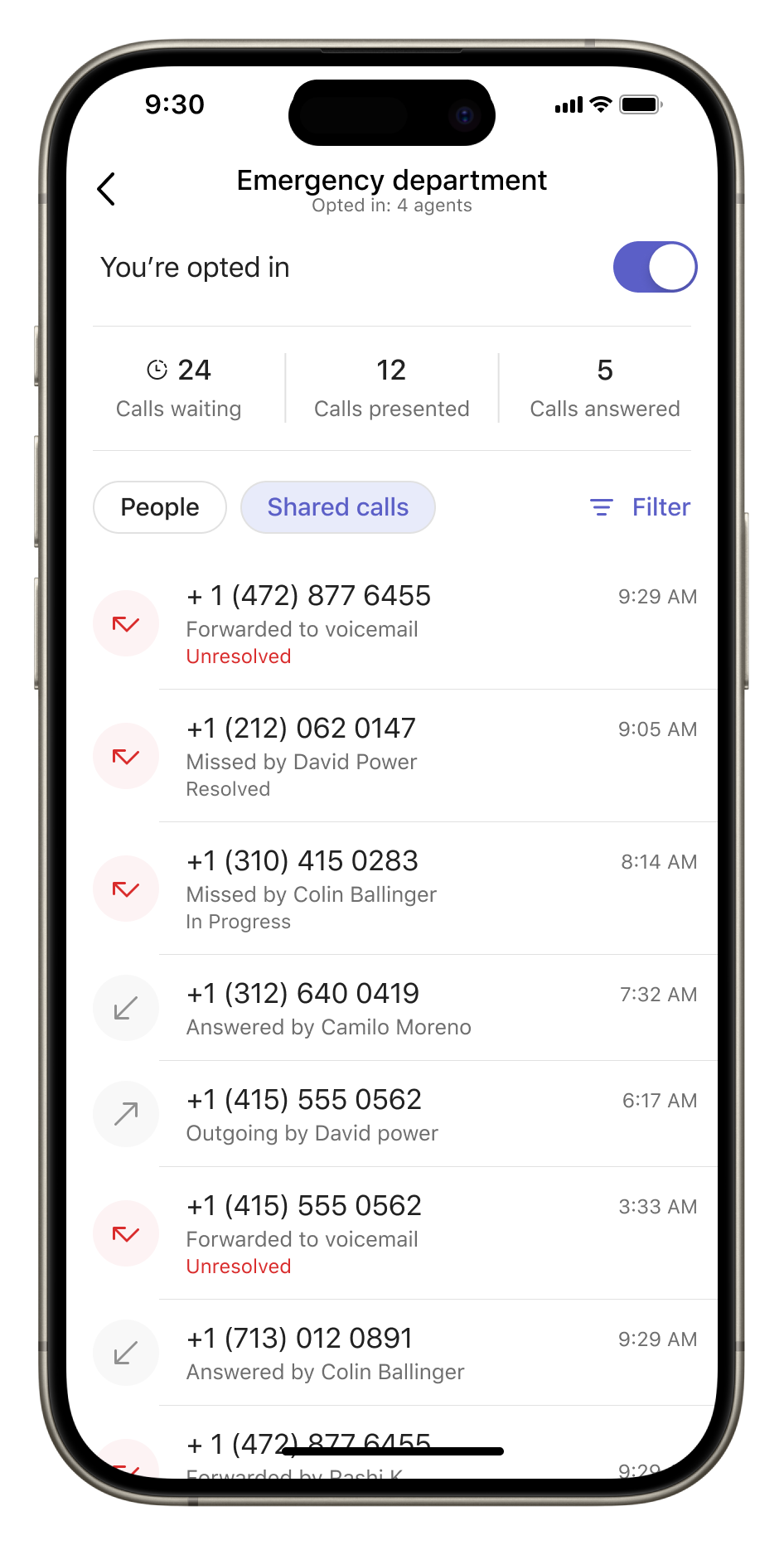
  • Authorized representatives can view shared call history across their call queue, including missed, answered, outgoing, and voicemail calls. Shared call history on mobile uses the same administrative settings as the desktop experience.

shared call history page

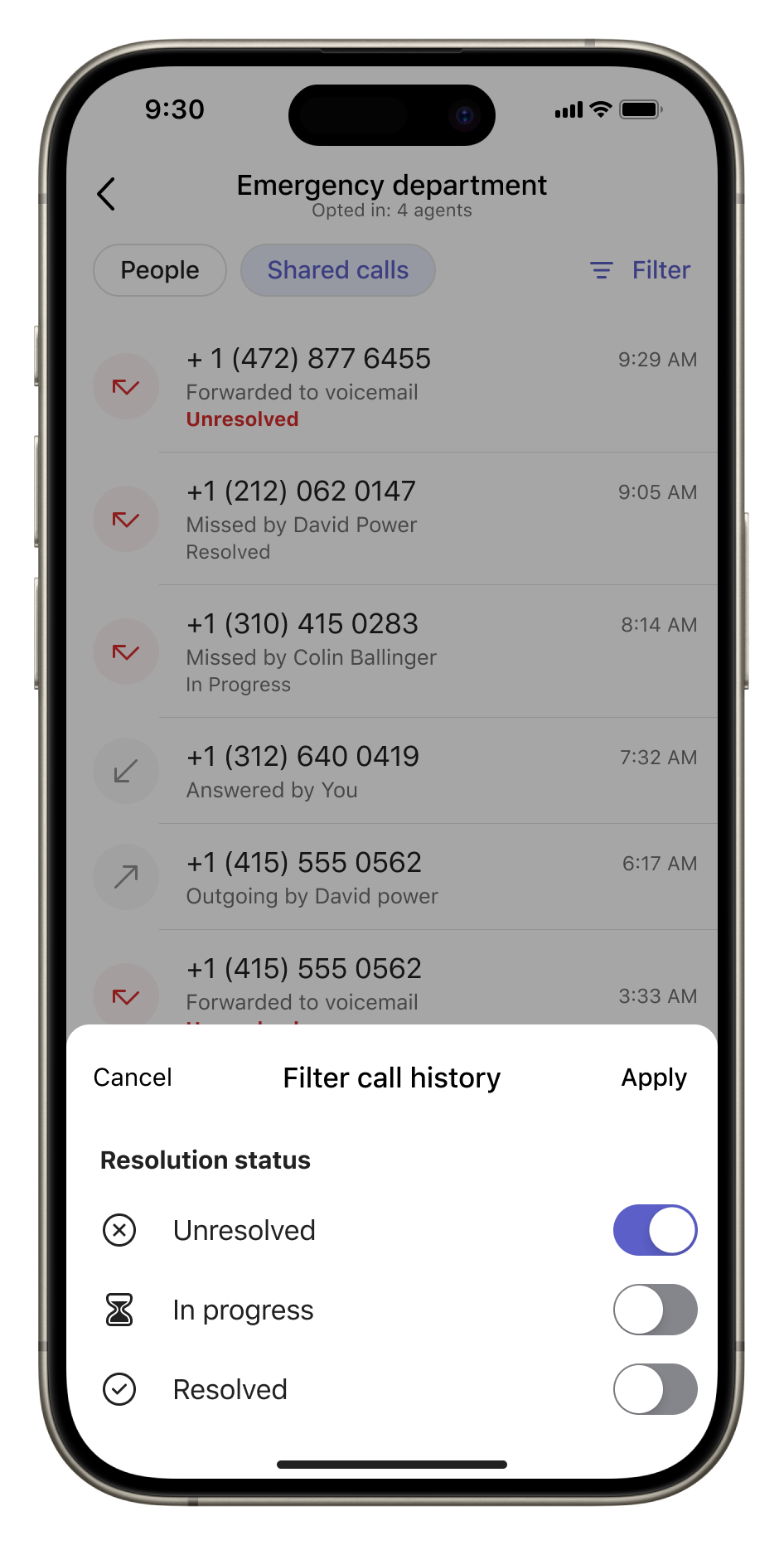
  • Users can filter call history by resolution status to identify calls that need attention.

call history filtering options

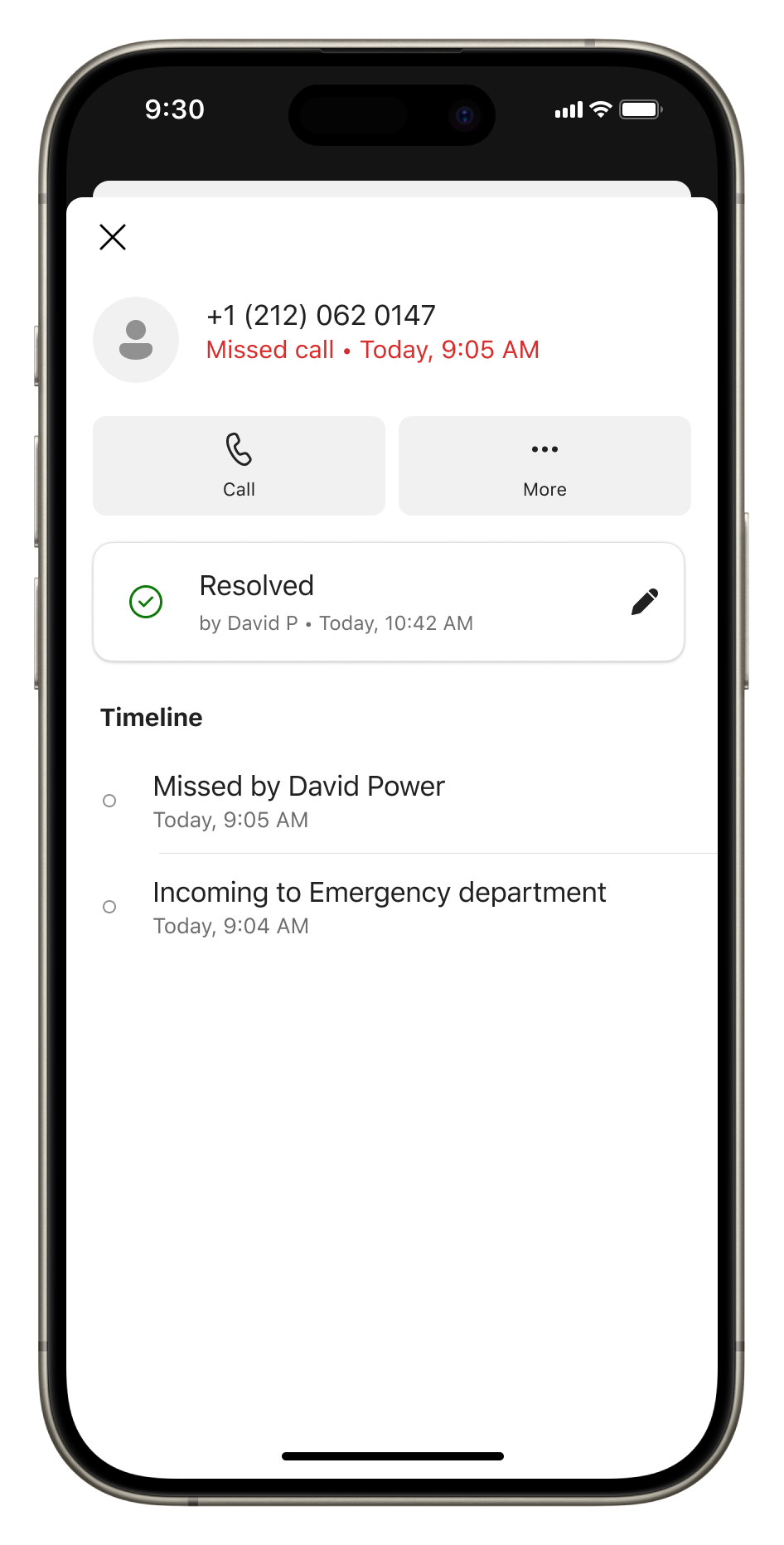
  • Users can tap a call to view details, including the caller, call type, time, voicemail or forwarding information, and a timeline of the call's progression through the queue.

missed call details

  • The system automatically marks missed calls as Unresolved, allowing representatives to identify customers who need follow-up.
  • Users can change missed call statuses to In progress or Resolved. All queue members with access to shared call history can see the updated status, who made the change, and when.
  • Users without shared call history enabled will continue to see only their personal call history.

Action required and recommendations

No new administrative action is required for this rollout. We recommend that you inform call queue representatives about the new mobile experience, particularly how to update missed call statuses to avoid duplicate follow-ups.

  • If your organization already uses shared call history, eligible users will automatically receive the mobile experience.
  • If shared call history is not enabled, you can enable it in the Teams admin center by creating a Shared Call History template and assigning it to your call queues. You can grant access to all queue members or restrict access to authorized users.

Learn more

Compliance considerations

No compliance considerations identified. Review as appropriate for your organization.